
by Jonathan Lyness
Programme Curator
I grew up with two older brothers; one played the violin, the other viola and violin, and they liked to busk! They’d head off in the summer with their instruments, hitch-hiking round Europe and busking in towns and cities, from Paris to Florence, where they’d also soak up some art. Busking back then was probably less regulated than it is now. Today, if you want to try your luck within the lengthy pedestrian tunnel between South Ken Tube and the museums, picking up change from tourists or prommers enroute to the Albert Hall, you’ll need a license from Transport for London together with Public Liability Insurance. For Florence, you’ll need to shell out 50 euros for a permit!
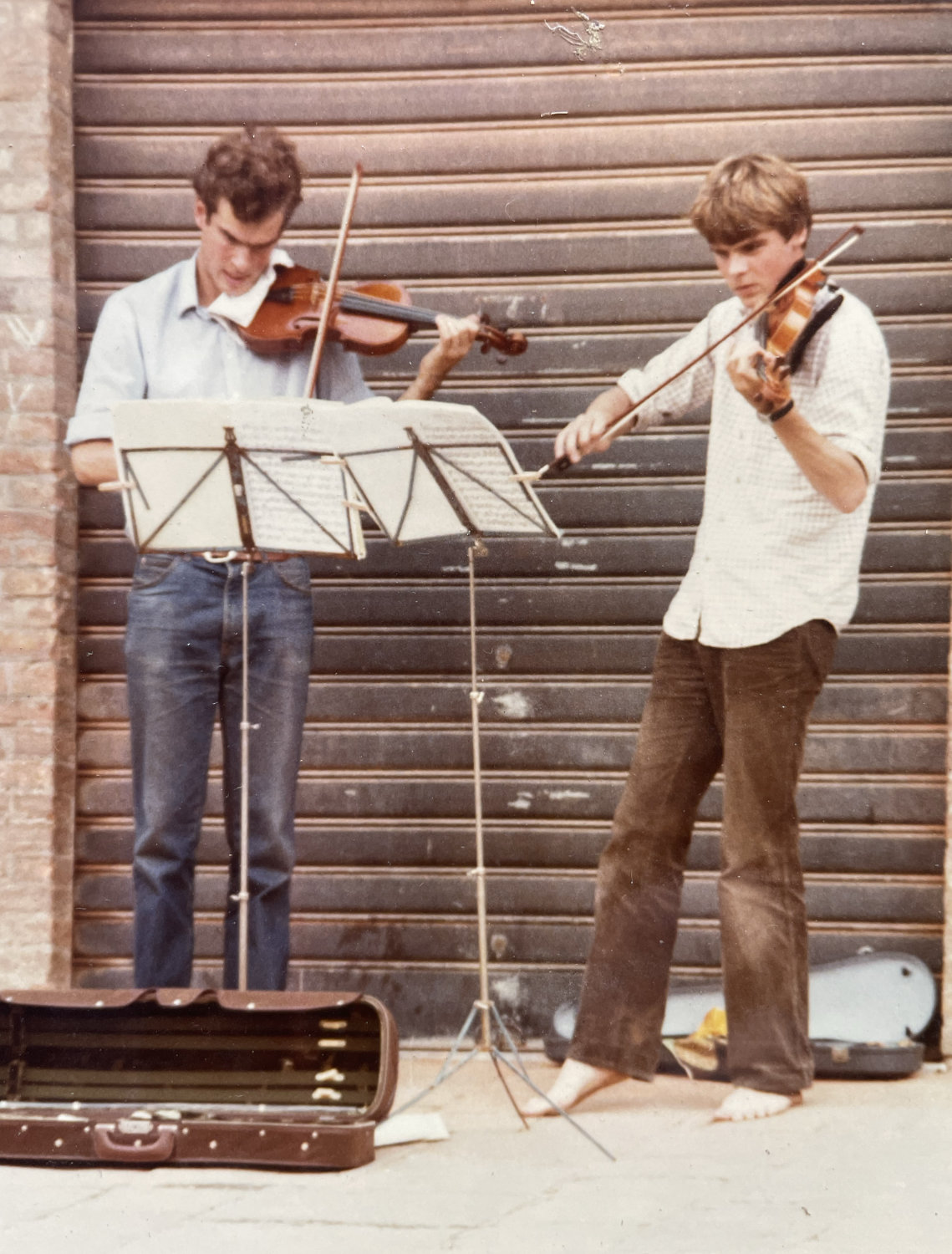
I always feel a solo busker looks a bit lonely, though at least they don’t have to share their proceeds. With three musicians, it all feels a bit too well organised. But there’s something rather wonderful about the perceived flippancy of a busking duo. My brothers usually busked with two violins (lighter to carry, I suppose?), but the violin/viola combo is, for me, the best, the two instruments providing just the right balance of interplay, functionality and personality!
The perfect married couple? I think that’s what Mozart must have felt, for not only did he compose the most amazing concerto masterpiece, the ‘Sinfonia Concertante’ for violin, viola and orchestra, but he also gave us his Duo in G major K423. There are some pieces of music that just lift your heart, and Mozart’s Duo is one of them. Written in a few days in the summer of 1783, it’s perfect in every way.
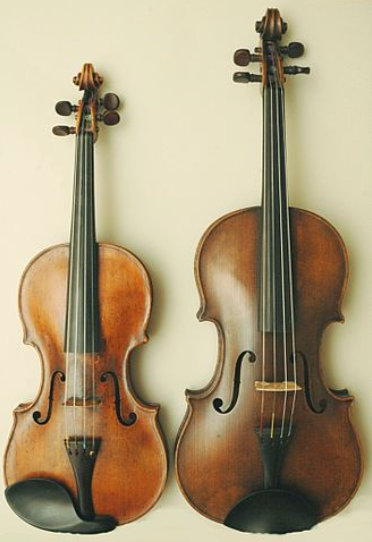
Jump forward to the last century, and one decade in particular, the 1940s, saw an explosion of Violin/Viola Duos! Duos had risen to prominence during the war years, with composers searching for intimate expression in small spaces with few participants. There had been a move towards neo-classicism, and two voices offered contrapuntal possibilities that suited this movement, harking back to Mozart. But in addition, the viola was on the rise! Many composers during this period played the viola, just as Mozart did, and a number of viola players became big stars and required new music.
It was a perfect storm, and for this programme we’ll hear some York Bowen, widely known as the ‘Rachmaninov’ of English music, and a deeply expressive outpouring from the great Czech composer Bohuslav Martinů whose Three Madrigals are just part of his large output for the viola.

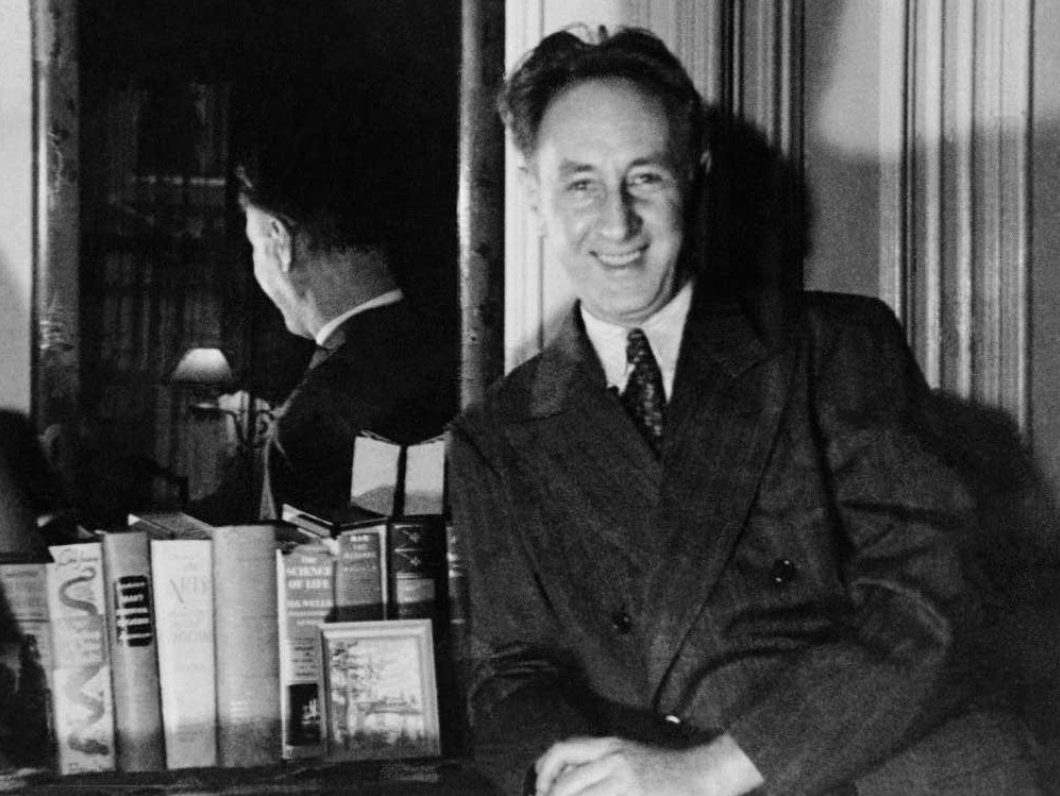
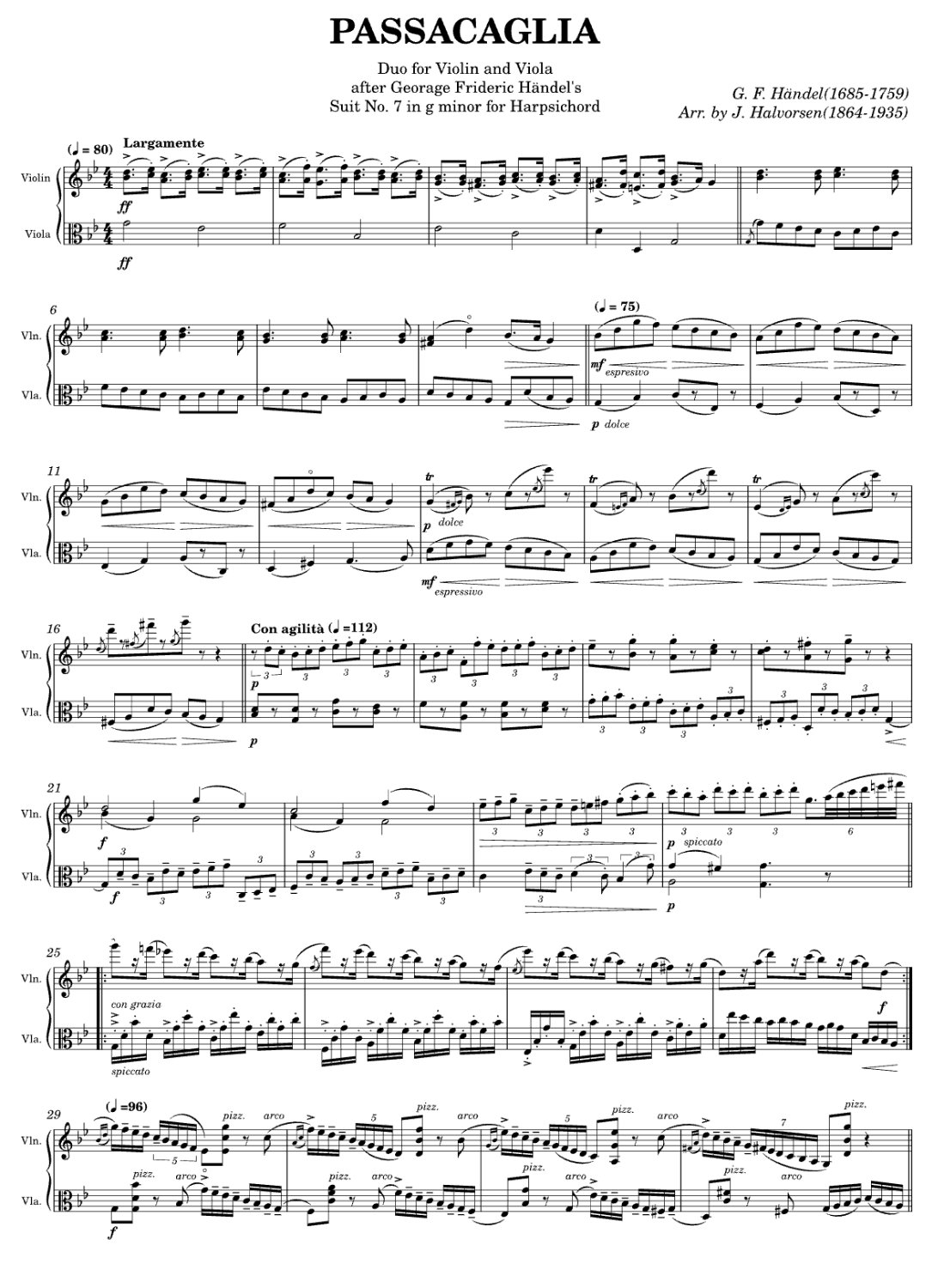
But a programme such as this would not be complete without Johan Halvorsen’s unbelievably popular Passacaglia from 1894. It is THE Violin/Viola showpiece which, for over 100 years, has become a mainstay of the ‘encore’ repertoire, not to mention the streets of historic European cities. The great Itzhak Perlman and Pinchas Zukerman virtually made a living out of it! But who needs them when we have our very own and very brilliant Elenid Owen and Sara Roberts to show us just what this piece has to offer!
Musicians
- Sara Roberts – viola
- Elenid Owen – violin
Programme
- Mozart (1756 – 1791) – Duo in G major K423 (1783), 16’
- Bohuslav Martinů (1890 – 1959) – Madrigal No. 2 (1947), 6½’
- Johan Halvorsen (1864 – 1935) – Passacaglia (1894), 7’
- York Bowen (1884 – 1961) – Duo No 1 ‘Poco Lento’ (1940s), 3½’
Events
- 11.00am, Sat 11 April 2026, Music Room, Gregynog Hall
- 4.00pm, Sun 12 April 2026, St. Mary’s Church, Conwy
- 11.00am, Mon 13 April 2026, Music Room, Neuadd Dwyfor
