
by Jonathan Lyness
Programme Curator
It is often said that the cello is the instrument best able to imitate the human voice. And that the piano or guitar are the instruments best suited to accompany the voice. But which instrument is best able to converse with the voice? The answer is arguably the violin. Both ‘instruments’ – voice and violin – have a similar range (if the voice is female); both are able to glide freely, nimbly, even seductively between notes; both can negotiate contrasting dynamics across their range; both can brush across phrases, bounce playfully, attack feverishly, shadow, accompany or counterpoint each other with relish. So, it should come as no surprise that several composers have written duets for voice and violin.
What may come as a surprise is that virtually all the significant classical repertoire for voice and violin comes from the 1920s! There is nothing of importance from any earlier period. If you’d wanted to hear a violin accompanying a voice prior to this, your best bet would have been to find a village pub with a good folk music scene. And perhaps that’s exactly what Vaughan Williams did, because he seemed to have started the ball rolling just a little earlier, in 1913, when he set two English folksongs for voice and violin – “Searching for Lambs” and “The Lawyer”. By this time, Vaughan Williams was deeply ensconced in the folk-music revival, and being an excellent violinist himself, showed how the violin could be a beautiful and sensitive partner to the voice.
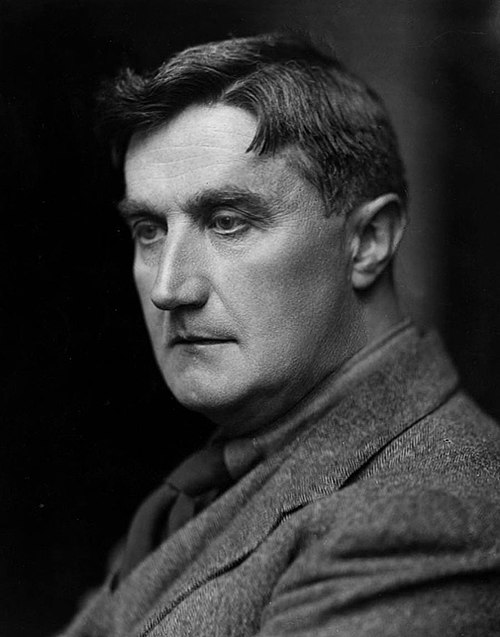
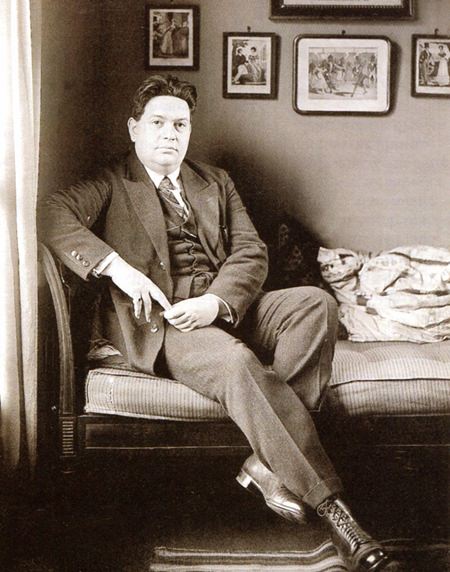
Word must have spread as, for a few years, songs for voice and violin came thick and fast from the likes of Gustav Holst, Darius Milhaud, Heitor Villa-Lobos and Rebecca Clarke, not to mention Gregynog Hall’s very own director of music Walford Davies who set ‘Shepherd Boy’s Song’ in 1917, the manuscript of which is contained within the archive of the RCM. Very little is known of Milhaud’s contribution from 1923, a setting of 4 poems by the Roman poet Gaius Valerius Catullus, translated into French. Milhaud was another violinist, the violin part displaying considerable technical bravura, with double-stops (that is, two or more strings forming chords and harmonies) coming in quick succession, complete with the composer’s fingerings and bowings, and always complementing and nourishing the voice.

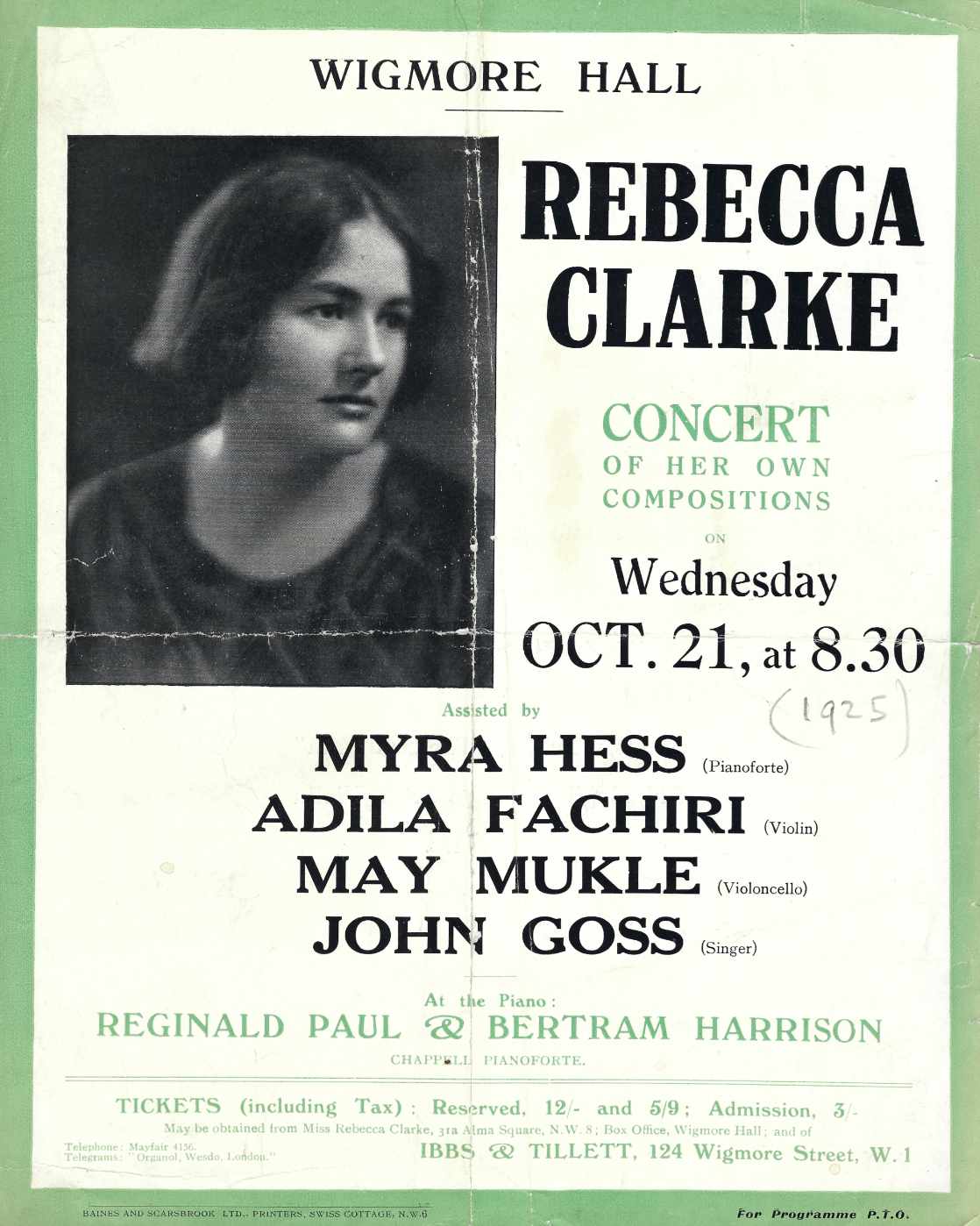
Rebecca Clarke was an internationally renowned viola player who came to prominence during the 1920s for both her playing and her powerful chamber works. In her “Three Old English Songs” (1924) and “Three Irish Country Songs” (1926), Clarke deploys both violin and voice as equals – the violin is indeed sometimes more expressive than the voice, despite having no words! Clarke and Vaughan Williams were close friends, often performing together and sharing ideas, so it is highly likely that Clarke’s songs would have spurred Vaughan Williams into returning to the voice/violin genre. In 1927 he created a cycle of 8 songs entitled ‘Along the field’, proving once again that the violin and the voice really are terrific and natural bedfellows.
Musicians
- Elenid Owen – violin
- Alys Mererid – Soprano
Programme
- Rebecca Clarke (1886-1979) – Three Old English Songs (1924) 6½’
- Ralph Vaughan Williams (1872-1958) – Songs from ‘Along the Field’ (1927) 6’
- Darius Milhaud (1892-1974) – Quatre Poèmes de Catulle, Op.80 (1923) 4½‘
- Rebecca Clarke (1886-1979) – Three Irish Country Songs (1926) 6½’
- Ralph Vaughan Williams (1872-1958) – Two English folk songs (1913) 5½’
Events
- 11.00am, Sat 8 November 2025, Music Room, Gregynog Hall
- 4.00pm, Sat 8 November 2025, Dragon Theatre, Barmouth
- 4.00pm, Sun 9 November 2025, St. Mary’s Church, Conwy
- 11.00am, Mon 10 November 2025, Neuadd Dwyfor, Pwllheli
