
by Jonathan Lyness
Welcome to Ensemble Cymru’s 2026-27 Music Room Season and a host of tantalising chamber music for our loyal audiences across Mid and North Wales. Just four programmes this time, but with more performances and more venues over four long weekends, each containing something for everyone!
Throughout the last two seasons we’ve featured British and French works from the early twentieth century, music written around the time the Davies Sisters took on Gregynog and made it such an amazing and unique cultural hub. We’ve explored several female composers including a host of works by Rebecca Clarke, and this season I’m delighted that, for November’s concerts, Sara Roberts and Richard Ormrod take on Clarke’s most celebrated work, the Viola Sonata from 1919. It’s a fabulous piece, highly romantic yet definitely of its time; lush, pensive, often virtuosic and with subtle shades of both Vaughan Williams and Debussy.

Our concerts in North Wales have guided us into looking at a composer who had a special affinity with this part of the country. Felix Mendelssohn, on his first tour of Britain in 1829, visited Flintshire as a guest of the prominent industrialist John Taylor. From there he became fascinated with Welsh industry, traveling along the north coast and painting as he went. Yes, Mendelssohn was, amongst many things, an accomplished artist, and his sketches from that period include one of Conwy Castle. I’m delighted that Nicki Pearce, also based in North Wales, will give a relatively rare outing to the composer’s effervescent and masterful Sonata for Cello and Piano No. 2, composed in 1842 and opening with the kind of bristling energy and fervour that could only have come from Mendelssohn.

As young boys, Robert Schumann and Camille Saint-Saens were extraordinarily gifted. Saint-Saens gave his debut piano recital aged ten after which, as an encore, he offered to play any of Beethoven’s 32 piano sonatas from memory! And Schumann, who started the piano aged seven, had a knack for improvising in the style of other composers and creating spontaneous musical caricatures of friends and family which people loved. Later, Saint-Saens parodied Offenbach, Berlioz and Mendelssohn to create his own animal caricatures in his Carnival of the Animals. And yet, with all this entertaining bravura, they are perhaps best loved for their most intimate musical expressions, such as songs, piano miniatures and chamber music.

And here they have something else in common. They both composed, during just one year, three works for wind instruments and piano. Schumann was 38/39 when he wrote his three, for clarinet, horn and oboe. By contrast, Saint-Saens was 85/86 when he wrote sonatas for oboe, clarinet and bassoon. Schumann’s pieces are stirringly romantic, the Saint-Saens sonatas elegant and refined whilst capturing an alluring French pastoral beauty. Saint-Saens was an avid admirer and promoter of Schumann and this season we feature chamber music from both composers including two Fantasies: the Saint-Saens Fantaisie for Violin and Harp, written in 1907 whilst on holiday in Italy and performed by Elenid Owen and Anne Denholm, and Schumann’s Fantasiestücke Op. 73, originally written for clarinet and piano (as mentioned above) but here performed on the viola by Sara Roberts.
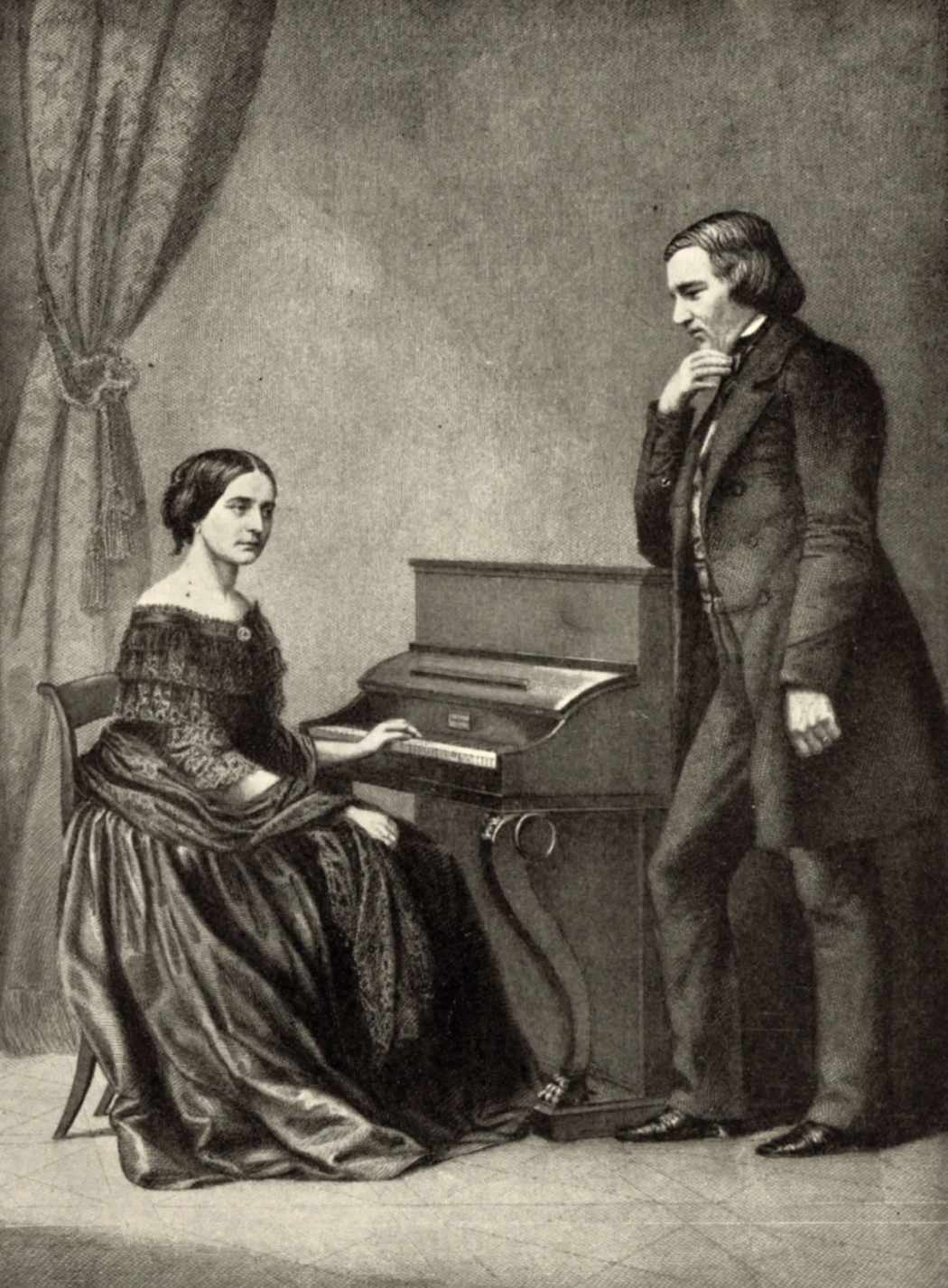
There will be a scattering of lighter chamber works by both composers, and the Season culminates with a performance by Huw Clement-Evans of the Saint-Saens Oboe Sonata and Schumann’s 3 Romances for Oboe and Piano, a beautiful work given as a Christmas present to Schumann’s wife Clara whose music we’ll also feature.
All in all, a joyful mix of great chamber music from some of Ensemble Cymru’s favourite performers. We look forward to seeing you there!
