
by Jonathan Lyness
Programme Curator
“If music be the food of love, play on” (Shakespeare, from Twelfth Night)
Musical gifts, from composers to their loved ones, are a bit of a thing. Grieg, Strauss, Mahler and Schumann all created them, as did Elgar whose “Salut d’Amour” (performed a year ago as part of this music series) was given as an engagement present for his wife Alice. Brahms’s Zwei Gesänge [two songs] Op 91 were written for his friends, the violinist/violist Joseph Joachim and the mezzo Amalie Schneeweiss; the first song for their wedding (and later revised for the christening of their first child); the second much later in an effort to reconcile the couple’s twenty years of stormy marriage! It didn’t work – Joseph and Amalie later divorced!

For their publication in 1884, Brahms reversed their chronological order, so that the first song (the later ‘act of reconciliation’), with its gentle tranquillity, precedes the earlier song, which is best described as a cradle lullaby. The mellowness of the viola, the richness of the mezzo voice, and Brahms’s dark hued piano writing create a unique sound world not lost on a scattering of later composers, two of whom were Frank Bridge, who wrote his highly expressive Three Songs in 1908, and the English composer and organist Benjamin Dale, whose story is quite remarkable!
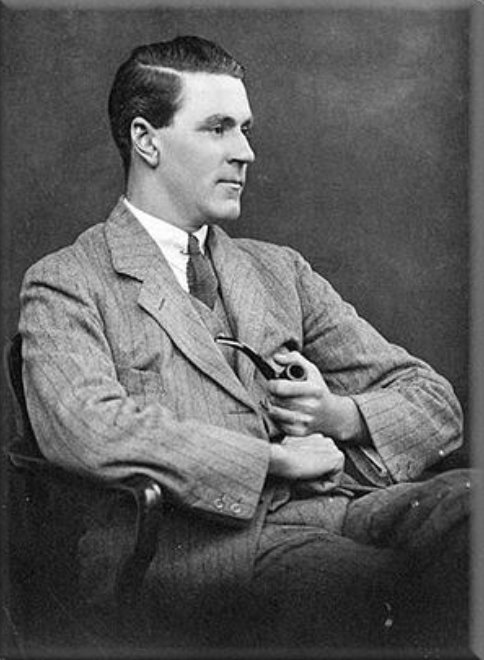

In the summer of 1914, Dale travelled to Germany for a season of Wagner opera, starting in Munich. When war was declared, Dale was detained, but his admiration for Wagner played well for him and in November he was sent to the civilian internment camp at Ruhleben, near Berlin. Ruhleben became a hive of cultural activity, and Dale was there for the rest of the war. It was there, in February 1918, that Dale wrote his two songs from Shakespeare’s Twelfth Night – “O Mistress Mine”, a graceful Elizabethan pastiche song; and “Come away, Death”, a sombre Sarabande for which, no doubt influenced by Brahms, Dale added a viola, already a favourite instrument of his.
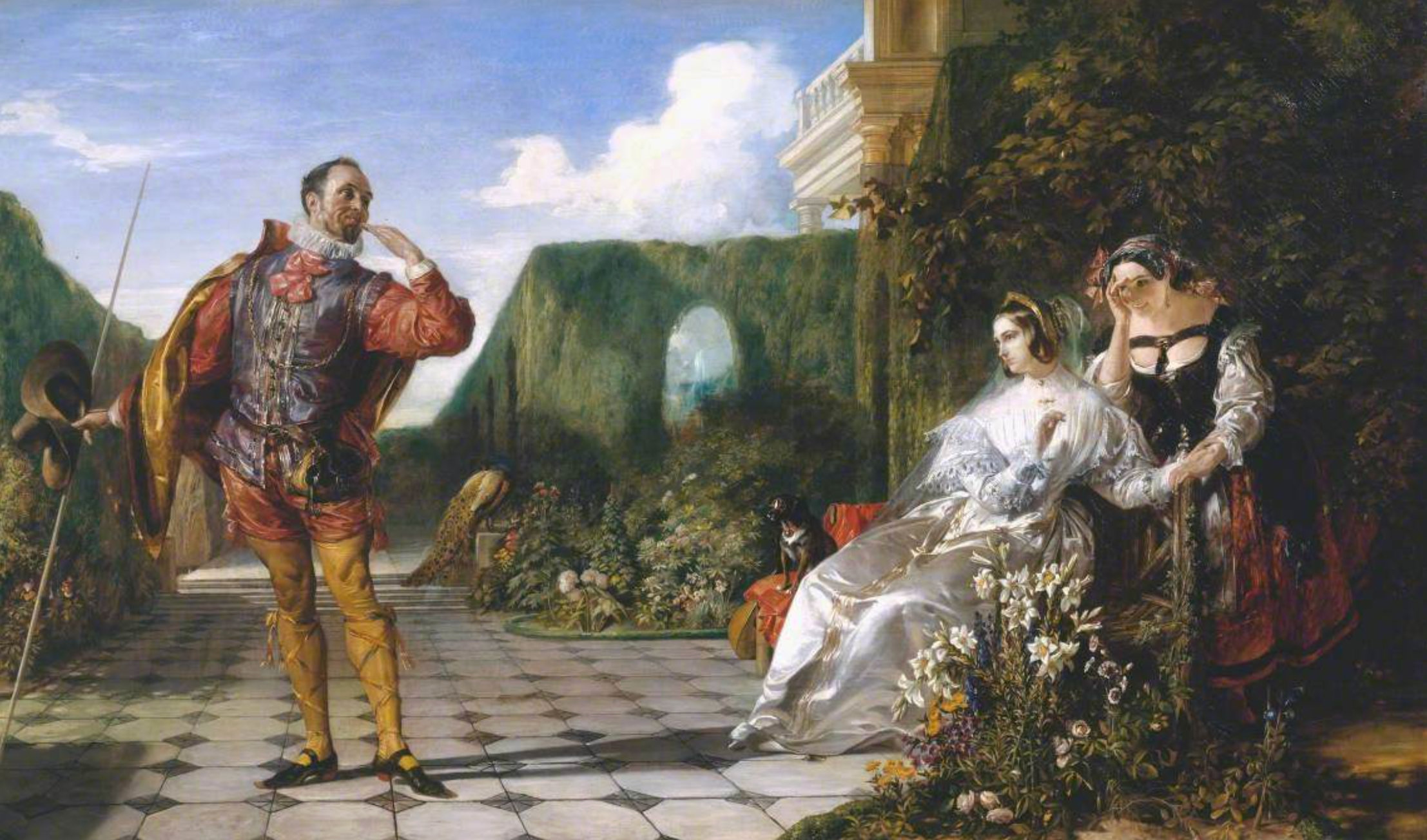
The following month, March 1918, he was exchanged in a prisoner swap, ending up in the Hague, before being repatriated to England just before the Armistice. Incredibly, the two Shakespeare Songs survived and were published by Novello in 1919 in two keys. The low-key original versions are not currently available, and it’s thanks to the archive libraries of both the RAM and the RCM that Ensemble Cymru has copies for these performances.


The composer and organist Louis Vierne, blind from birth, composed two short pictorial pieces for viola and piano as a young man, but is perhaps best remembered today for enduring one of music’s most spectacular deaths! In 1937 he was giving his 1,750th organ recital to a packed-out Notre Dame in Paris when he suddenly lost consciousness, his foot hitting the low ‘E’ pedal which continued to resonate around the cathedral after he’d died. He’d always dreamed of dying at the organ of Notre-Dame; and so it came to pass, with the composer Maurice Duruflé, who had been page-turning, sitting next to him.
Musicians
- Rebecca Afonwy-Jones – mezzo soprano;
- Sara Roberts – viola;
- Jonathan Lyness – piano
Programme
- Ralph Vaughan Williams (1872-1958) – Songs from ‘Along the Field’ (1927) 6’
- Frank Bridge (1879 – 1941) – Three songs for mezzo, viola and piano (1906-07), 10’
“Far, far from each other” (words by Matthew Arnold)
“Where is it that our soul doth go?” (words by Heine, trans Kroeker)
“Music, when soft voices die” (words by Shelley) - Rebecca Clarke (1886 – 1979) – Three songs with words by W. B. Yeats for mezzo and piano, 5½’
“Shy one” (1921)
“The Cloths of Heaven” (1920)
“Down by the Sally Gardens” (1924) - Louis Vierne (1870 – 1937) – Deux pièces for viola and piano Op. 5 (1895), 5½’
“Le Soir” et “Légende” - Benjamin Dale (1885 – 1943) – Two songs from Shakespeare (1918), 7’
“O Mistress Mine” for mezzo and piano
“Come away death” for mezzo, viola and piano - Johannes Brahms (1833 – 1897) – Two songs for mezzo, viola and piano Op.91 (1884), 12’
“Gestillte Sehnsucht” (words by Friedrich Rückert)
“Geistliches Wiegenlied” (words by Emanuel Geibel, after Lope de Vega)
(NB previously performed at Gregynog 16/06/1934)
Events
- 11.00am, Sat 7 March 2026, Music Room, Gregynog Hall
- 11.00am, Sun 8 March 2026, Music Room, Dragon Theatre, Barmouth
- 4.00pm, Sun 8 March 2026, St. Mary’s Church, Conwy
